
Ant infestations can turn a peaceful home into a daily struggle. Kitchens, pantries, and sinks often hide ant trails so precise that they reveal the entire colony’s pathway to food. Most people expect to find ants only where there’s a spill or a crumb, but that is just the beginning. The real surprise is how these tiny invaders use almost invisible cracks, baseboards, and even electrical outlets as their secret highways—and once you know where to look, the patterns tell you much more than you’d ever guess.
Table of Contents
- Step 1: Identify Common Ant Trails And Entry Points
- Step 2: Inspect Indoor Spaces For Signs Of Ants
- Step 3: Examine Your Outdoor Environment For Nesting
- Step 4: Monitor Food Sources And Waste Areas
- Step 5: Record Findings And Look For Patterns
- Step 6: Verify Infestation Severity And Take Action
Quick Summary
| Key Point | Explanation |
|---|---|
| 1. Identify ant trails and entry points | Systematically inspect areas like kitchens and around sinks for trails to locate infestations and entry routes. |
| 2. Thoroughly inspect indoor spaces | Check cabinets, pantries, and appliances for signs of ants, ensuring to clean and remove potential food sources. |
| 3. Examine outdoor nesting environments | Investigate the perimeter of your home and garden areas, focusing on moist zones and potential nesting sites. |
| 4. Monitor and manage food sources | Keep kitchens and waste areas clean, sealing food properly to eliminate attractants and disrupt ant foraging behavior. |
| 5. Document findings and recognize patterns | Track ant movements and environmental conditions in a structured way to inform your pest control strategies effectively. |
Step 1: Identify Common Ant Trails and Entry Points
Spotting ant infestations early requires a keen eye and systematic observation of your living spaces. Ants are masters of stealth, often creating intricate trails that go unnoticed by untrained observers. These tiny invaders typically establish predictable movement patterns that can reveal their entire colony’s presence and potential entry points.
Start by examining areas where moisture, food, and warmth converge. Kitchen counters, pantry edges, baseboards, and areas around sinks are prime locations for ant trails. Look for thin, consistent lines of ants moving in synchronized patterns. These trails are not random wanderings but strategic pathways connecting their nest to food sources. Pay special attention to tiny cracks in walls, window frames, and floor joints where ants can easily slip through.
Detecting ant entry points requires methodical inspection. Begin near potential food sources like garbage areas, pet food bowls, and kitchen spaces. Ants leave chemical trails that guide other colony members, creating visible pathways. A single ant might seem inconsequential, but it often signals a larger population waiting to explore your living space. Use a flashlight during your inspection to illuminate dark corners and narrow spaces where these insects typically travel.
Pest Control Research Institute suggests tracking ant movements during different times of day. Morning and evening hours often reveal the most active trails. Watch for consistent movement patterns and note the specific routes ants take. Some species prefer linear paths along walls, while others create more meandering routes. Understanding these patterns helps you identify potential nest locations and critical intervention points.
Verification of an ant infestation involves more than just spotting a few insects. Look for subtle signs like tiny soil or wood particle accumulations near potential entry points, which might indicate nest building. Small, almost invisible holes in wooden structures or consistent ant movement near electrical outlets can signal a more significant problem. By meticulously examining these details, you transform from a passive observer to an active defender of your living space against these persistent invaders.
Step 2: Inspect Indoor Spaces for Signs of Ants
After identifying potential ant trails, a comprehensive indoor inspection becomes crucial in understanding the extent of your ant problem. Indoor spaces provide numerous hidden environments where ants can establish their colonies and forage for resources. Your goal is to systematically examine every potential nook and cranny where these persistent insects might congregate.
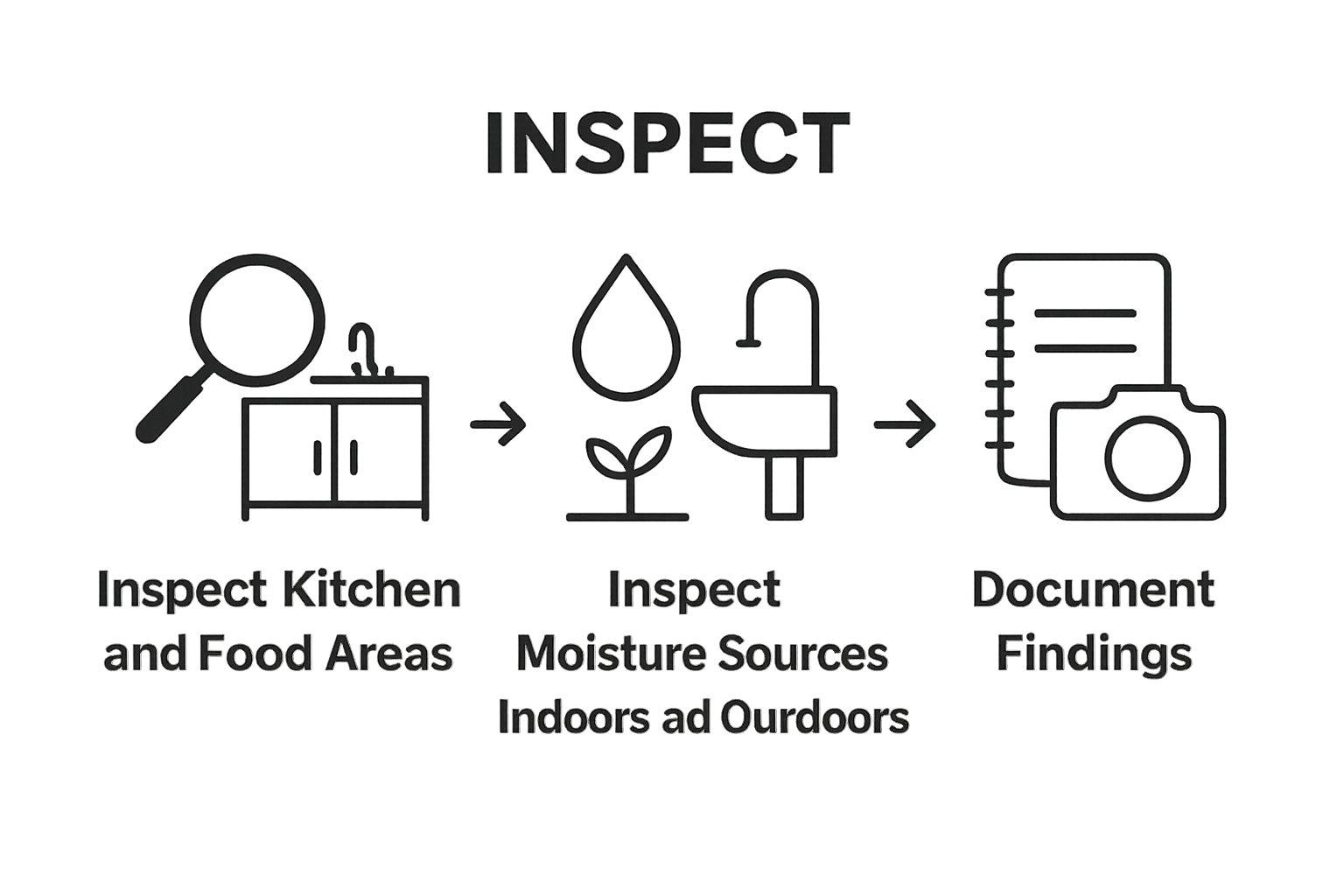
Kitchen areas represent the most critical zones for ant investigation. Start with cabinets, pantries, and food storage spaces. Pull out stored items and inspect shelf surfaces, checking for tiny ant clusters or scattered individuals. Pay special attention to areas around trash containers, refrigerator seals, and small crevices near appliances. Ants are attracted to even microscopic food residues, so clean surfaces might not immediately reveal their presence.
Move beyond the kitchen and examine other potential hot spots like bathrooms, laundry rooms, and areas with potential moisture accumulation. Check around sinks, bathtubs, and water pipes where condensation can create attractive environments for ant colonies. Window sills, baseboards, and spaces behind furniture offer perfect hidden pathways for these tiny invaders. Use a bright flashlight to illuminate dark corners and examine surfaces closely, looking for subtle movement or tiny trails.
University of California Agriculture and Natural Resources recommends using a magnifying glass during your inspection to identify specific ant species and understand their potential entry points. Different ant species have unique behaviors and preferences, which can help you develop a targeted removal strategy. Look for signs like small piles of fine wood particles, which might indicate carpenter ants, or tiny soil-like debris near wall junctions that could signal nest-building activities.
Successful inspection involves patience and thoroughness. Document your findings by taking clear photographs of ant trails or potential entry points. Note the specific locations, frequency of ant movement, and any environmental conditions that might be attracting these insects. This detailed approach transforms your inspection from a casual glance into a strategic assessment that will guide your subsequent ant control efforts.
Step 3: Examine Your Outdoor Environment for Nesting
An ant infestation rarely remains confined to indoor spaces. Your outdoor environment often serves as the primary breeding ground and launching point for ant colonies seeking to infiltrate your home. Understanding the intricate landscape surrounding your property becomes crucial in detecting and preventing widespread ant invasions.
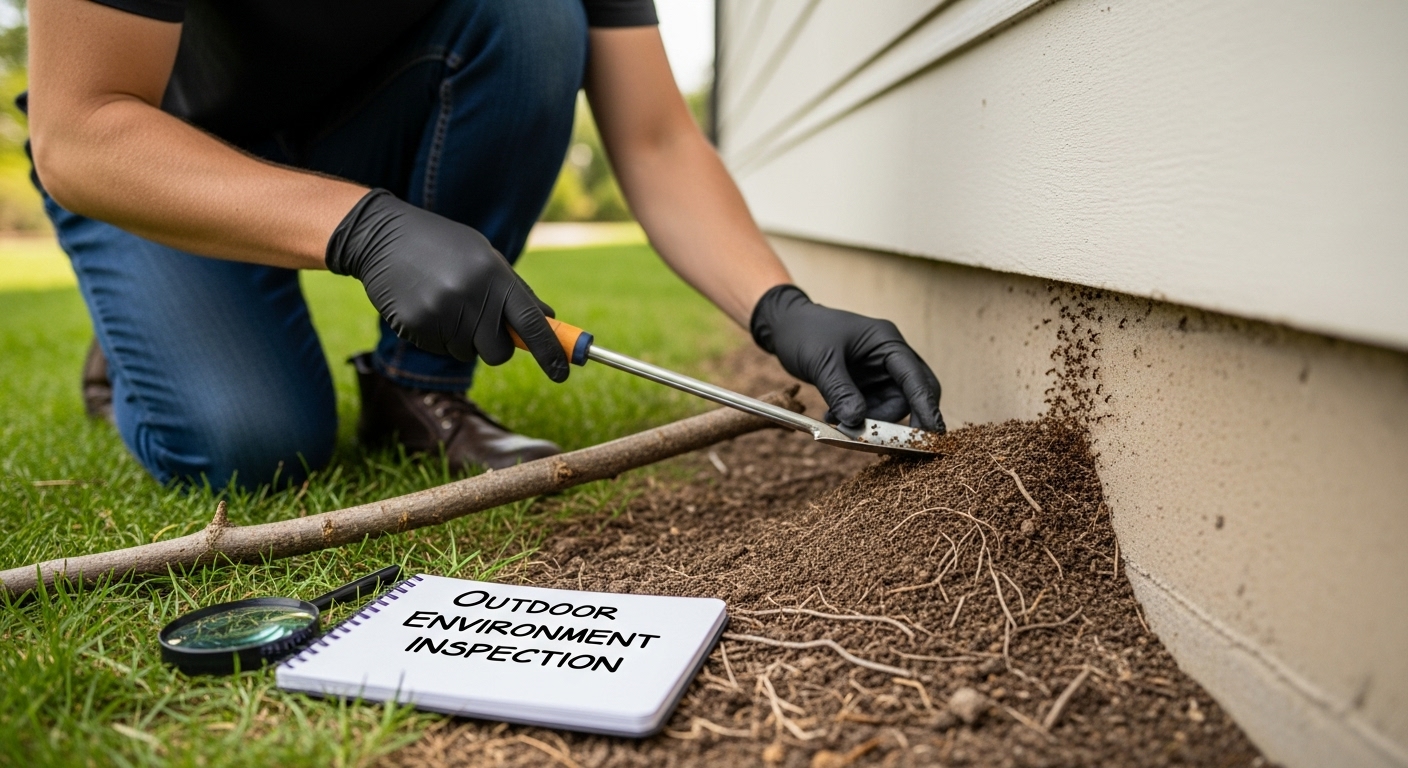
Begin your outdoor investigation by systematically examining the perimeter of your home. Focus on areas where your building’s foundation meets the ground, as these junctions represent prime real estate for ant colonies. Look for small mounds of excavated soil, miniature crater-like openings, or consistent ant movement across surfaces. Landscape features like mulch beds, garden areas, and spaces near woodpiles create perfect nesting environments for various ant species.
Carefully inspect potential nesting zones that might connect directly to your home’s structure. Pay particular attention to areas with consistent moisture, such as near outdoor faucets, air conditioning units, and drainage systems. Wooden structures like decks, fences, and garden furniture can harbor hidden ant colonies, especially if they show signs of moisture damage or decay. Use a long stick or gardening tool to gently probe these areas, watching for ant movement or disturbance.
University of Florida Entomology Department recommends looking for specific environmental conditions that attract ant nests. Observe areas with loose soil, fallen leaves, stones, or debris that provide shelter and protection. Some ant species prefer sunny locations with well-drained soil, while others thrive in shaded, damp environments. Take note of the specific microhabitats around your property and how they might contribute to ant colony establishment.
Successful outdoor inspection requires patience and a methodical approach. Wear light-colored clothing that makes ant movement easier to detect, and consider using a magnifying glass for close examination. Document your findings with photographs, noting the specific locations, ant species if identifiable, and potential entry points connecting outdoor nests to your home’s interior. This comprehensive assessment transforms your inspection from a casual survey to a strategic reconnaissance mission against potential ant invasions.
Step 4: Monitor Food Sources and Waste Areas
Ants are relentless foragers with an extraordinary ability to detect and exploit even the smallest food sources. Your kitchen, pantry, and waste management areas represent prime hunting grounds for these persistent insects. Understanding how ants locate and access food will help you disrupt their strategic invasion routes and minimize potential infestations.
Kitchen counters, dining areas, and food preparation spaces require meticulous attention and immediate cleaning. Ants can detect microscopic food residues from significant distances, making even the smallest crumb a potential feast. After meal preparation, thoroughly wipe down surfaces using a cleaning solution that eliminates both visible debris and invisible food traces. Pay special attention to areas around appliances, under refrigerator seals, and along backsplashes where food particles frequently accumulate unnoticed.
Waste management becomes a critical battleground in ant prevention. Garbage containers both inside and outside your home must be sealed tightly and cleaned regularly. Use containers with secure, tight-fitting lids that prevent ants from accessing food waste. Consider placing a thin layer of diatomaceous earth around garbage bin edges as a natural deterrent. Outdoor trash areas require similar vigilance, with regular cleaning and maintenance to remove potential ant attractants. Remember that organic waste like fruit peels, coffee grounds, and leftover pet food can quickly become ant magnets if not properly disposed of or cleaned.
National Pest Management Association recommends developing a comprehensive food management strategy that goes beyond immediate cleaning. Store dry goods in airtight containers, avoid leaving pet food out overnight, and regularly inspect pantry shelves for signs of ant activity. Create a routine of wiping down surfaces, sealing food containers, and minimizing exposed food sources. By transforming your living space into an environment that is systematically inhospitable to ants, you significantly reduce the likelihood of sustained infestations. Consistent, proactive measures are your most effective defense against these persistent household invaders.
Step 5: Record Findings and Look for Patterns
Transforming your ant investigation from a random search to a strategic assessment requires systematic documentation and pattern recognition. Simply observing ant activity is not enough. You need a structured approach that captures detailed information about their movements, preferred locations, and potential entry points.
Create a comprehensive documentation system using a dedicated notebook or digital tracking method. Photograph ant trails, nest locations, and potential entry points with clear, well-lit images that capture minute details. Include timestamps and specific location descriptions for each observation. This systematic approach allows you to track changes in ant behavior over time and identify recurring patterns that might reveal the underlying structure of their colony’s movement and expansion strategies.
Consider creating a home layout sketch that marks specific ant activity zones. Note the frequency of ant movement, time of day, and environmental conditions surrounding each observation. Pay attention to seasonal variations, as ant behaviors can shift dramatically with temperature and humidity changes. Temperature, moisture levels, and proximity to food sources all play crucial roles in understanding ant colony dynamics. Look for correlations between indoor and outdoor ant activities, tracking how external environmental changes might influence their movement patterns.
University of California Agriculture and Natural Resources recommends developing a temporal tracking method that goes beyond simple location mapping. Record not just where ants appear, but also the specific times and conditions of their movement. Some ant species are more active during specific hours, and understanding these rhythms can provide critical insights into their colony’s structure and potential vulnerabilities. Your meticulous documentation transforms random observations into a strategic intelligence gathering mission, providing the foundational knowledge needed to develop targeted intervention strategies against these persistent household invaders.
Step 6: Verify Infestation Severity and Take Action
Determining the extent of an ant infestation requires a careful assessment of multiple factors beyond simple visual observations. The transition from detection to intervention demands a strategic approach that evaluates the colony’s size, potential damage, and most effective control methods. Not all ant invasions are created equal, and your response must be proportionate to the actual threat.
Begin by categorizing the infestation level based on population density and observed behavioral patterns. Small, isolated ant trails might indicate an early-stage problem that can be managed with targeted home interventions. Large, consistent ant populations moving across multiple areas suggest a more established colony requiring comprehensive treatment. Look for signs of structural compromise, such as wood damage, consistent trails through wall cavities, or multiple distinct nest locations around your property. These indicators help you distinguish between a minor nuisance and a potentially serious ecological challenge.
Carefully evaluate your intervention options, considering both immediate and long-term strategies. Natural deterrents like diatomaceous earth, vinegar solutions, and strategic barrier creation can be effective for smaller infestations. More extensive ant populations might require professional-grade baiting systems or targeted chemical treatments. Consider the specific ant species, as different varieties respond uniquely to various control methods. Some species are more resistant to standard treatments, necessitating specialized approaches that disrupt their colony’s reproductive and foraging capabilities.
National Pest Management Association recommends developing a multi-layered approach that combines immediate intervention with preventative measures. Seal potential entry points, eliminate food sources, and create environmental conditions that discourage ant colonization. Your goal is not just to eliminate the current population but to make your living space fundamentally less attractive to future ant invasions. This holistic strategy transforms pest control from a reactive process to a proactive management system, ensuring long-term protection against these persistent household invaders.
Below is a checklist table to help you verify ant infestation severity and decide on the next course of action based on the guidance in this article.
| Checkpoint | What to Look For | Next Steps |
|---|---|---|
| Number of Ants | Occasional vs. large, consistent population | Small numbers: monitor; Large numbers: prepare interventions |
| Trail Locations | Multiple, persistent trails across various rooms | Widespread: assess for nesting and entry points |
| Evidence of Nesting | Soil/wood particles, hollows in wood, multiple nests | Single nest: targeted removal; Multiple: comprehensive action |
| Signs of Structural Damage | Wood decay, wall cavity trails, damaged structures | Minor: DIY fixes; Significant: consider professional help |
| Ant Species Identification | Common kitchen ants vs. carpenter/tree ants | Identify species for most effective treatment strategy |
| Food & Waste Issues | Unsealed food, frequent ant access to waste | Eliminate sources to cut off supply and disrupt trails |
| Past Treatment Effectiveness | Recurring vs. contained infestations | Recurring: escalate interventions; Contained: maintain prevention |
Stop Ant Infestations Before They Get Out of Control
Struggling with hidden ant trails and hard-to-find nest sites in your home? The steps described in this article show just how easily ants slip into kitchens, pantries, and living spaces. Finding these pests early is crucial, yet many homeowners miss subtle warning signs like tiny soil piles or nearly invisible entry points. If you feel overwhelmed by recurring ant problems despite your best efforts at cleaning and inspection, you are not alone. Hiring expert help can turn frustration into peace of mind.

Let our local team at Skadedyrbekjemperen take over with a free professional inspection. We use environmentally friendly solutions tailored for your home and always prioritize the safety of your family and pets. Whether you have just spotted your first ant trail or suspect a larger infestation, our experts act fast to pinpoint nest locations and entryways. Contact us today for reliable ant control and reclaim a pest-free home. Acting now ensures you stop ants before they spread further.
Frequently Asked Questions
How do I identify ant trails in my home?
To spot ant trails, examine areas where food, moisture, and warmth are abundant, such as kitchens and pantries. Look for consistent lines of ants moving in patterns that lead to potential food sources.
What are some common signs of an ant infestation?
Signs include visible ant trails, small piles of soil or wood particles near entry points, and the presence of ants consistently moving across surfaces, especially near food sources.
How can I prevent ants from entering my home?
Seal cracks and entry points, keep food stored in airtight containers, clean up spills immediately, and maintain clean waste management practices to deter ants from entering your living spaces.
What should I do if I find an ant infestation in my home?
Assess the severity of the infestation by checking the population density and signs of nesting. Use targeted interventions like natural deterrents or professional treatments based on the specific ant species involved.